Could Donald Trump Still win???


Hellooo from England- yes we are going into lockdown again but unless you happen to live under a fat rock then you will know that the presidential election is coming up shortly. And you may even be aware that many Americans have already voted.

If you know a little more about what is going on in America then you may well think that Trump is not going to get re-elected. For a start he has “handled” the covid crisis in a terrible way, he isn’t even a proper politician and Biden is well ahead in the opinion polls anyhow.

Though I cannot be the only person with some deep gut feeling that Trump might just win again… Because judging from last time, it is quite likely again that Trump and his team have something extra up their sleeve! On top of the action he has been taking recently, in trying to swing the result his way…

The Dodgy Emails:

So remember back in 2016, 11 days before the election the FBI announced it was examining newely discovered emails sent of received by Hillary Clinton. This was after she had set up her own email system, which enabled her to become the  “sole arbiter of what should and shouldn’t be provided to the government, made public via freedom of information requests or turned over to interested parties.” Subsequently an FDI investigation found that she used “numerous personal devices” while in office and relied on several email servers. While it was decided that she should not face criminal charges, the disturbance caused by this so soon before the election, caused a lot of uproar at the time. Potentially deterring voters from voting for Clinton, due to the lack of trust. As Trump described Clinton as a “liar”, “dishonest” and “untrustworthy”. Furthermore Trump and his supporters were obsessed with the emails sent by Clinton, drawing further attention to this. This was to the degree that Trump supporters were shouting “lock her up” three years into his premiership. Therefore it could have been quite possible that the announcement could have been encouraged by Trump’s team, in order to swing the election. While there is still time for something like this to happen in this current election- so watch this space…

Fewer Ballots

So as you know the Trump campaign have been doing everything they can do swing votes in their favour or rather reduce the number of votes in Biden’s favour. For instance Trump has already falsely claimed that it is illegal to count mail in ballots after election day, stating “It would be very, very proper and very nice if a winner were declared on Nov. 3, instead of counting ballots for two weeks, which is totally inappropriate, and I don’t believe that’s by our laws. I don’t believe that.” Meanwhile Trump has been constantly attacking postal voting, for being very susceptible to fraud, having blocked funding in some cases. While democrats are more likely to vote by post compared to republicians. Moreover some remote polling stations have been removed, making it more difficult for some of the public to vote. This has especially been focused in swing states, meaning that it is likely that votes for democrats have been targeted.

Unfair electoral System

It is actually true that Clinton won the popular vote by over a million, however because of how the electoral system works- where a weight is given to the outcome per state- it meant that Trump still managed to win the result. This year, the case of this looks less likely with it looking like most of the swing states are strongly in Biden’s favour this year. Alongside with Trump’s tactics in increasing the difficulty for some to vote, it could be possible that the electoral system may work in favour of Trump yet again. Although it is important to recognise that Trump has been one of just 5 presidents to win, while not gaining the majority popular vote.

Is it too soon for a “Happy Ending”

What I mean is that is it already time for America to elect a less right wing leader, or has America (and other countries) not become fed up enough of racism, sexism and fascism and don’t quite desire change yet? Because we have seen similar trends in other countries, such as the UK with Brexit and the rise (and fall to be fair) of UKIP/Brexit party, the popularity of the RN in France and I don’t even want to mention what is happening in Poland at the moment.

What’s more frightening is that Trump is frantically worried about an outcome which leaves him as no longer president. Therefore he will do whatever he can to change this. He has already mentioned that if he doesn’t win the election, he will take it to court, although he has also suggested he may choose to leave the country!

Therefore while there is potential for Trump to win, hopefully this year it is too late for any major changes to occur, and we can all hope that Trump doesn’t get reelected.

Ideal Inspiration Blogger Reward


Thankyou @artpsychoblog for nominating me for this reward. here I am going to be answering some questions asked by them, and will provide my own questions for my nominees 🙂

Ideal Inspiration Blogger Award is a non-official Award to the bloggers as a reward of wonderful work on their blogs. It’s just as important because it really reflects the good impact we can have on other people’s lives. It is important for the inspiration towards the success journey of our fellow bloggers and especially newbie’s to become the future Stars.

Rules

  1. Thank the person who has nominated you and provide a link back to his/her blog
  2. Answer their questions
  3. Nominate up to 9 other bloggers and ask them 5 new questions
  4. Notify the nominees through their blog by visiting and commenting on their blog 
  5. List the rules and display the “Ideal Inspiration Blogger Award” logo
  6. Provide the link of the Award creator of the Ideal Inspiration Blogger award as Rising Star from:  https://idealinspiration.blog
  1. An ideal life demands one to be Creative, to stay Fit and to Earn well! Which categories (1 or more) of the 3 do you think you have successfully got yourself covered at present and how do you maintain your stand in these categories?

Um, well I think that I am probably being creative enough generally through having this blog, and being able to think about what kind of content I upload, however there is definitely room for improvement… I am more in the middle with staying fit because I do intend to “work out” twice a week, although I am not sure if that is enough. While I would say I am too young to be earning well financially because even though I do have a job, it is only part time because of studying etc…

How do you interact with the WordPress Blogging community? Do you know anyone in the community beforehand or do you communicate via other mediums?

Nope, I didn’t know anyone on wordpress before starting a blog, but I make sure to interact with the amazing bloggers whom I follow, as well as frequently checking out other accounts. BTW it is SO important to respond to comments, and I try to make sure I respond to every one I receive 😉

How do you handle roadblocks in your life? Is there any difference in the usual hard times comparing present to the times before mid-March?!

I think the best way is tot tell yourself that yes it is hard, and yes it is ok to be upset, angry, to cry etc. However I always tell myself that I can and will get through any difficult time, and that I am going to be stronger having gone through something difficult. There isn’t much of a difference in cooping mechanisms to be fair, though if anything I am slightly less reluctant to seek help now😅 Oh and for anyone happening to read this, I know for some it is going to be super hard, but seriously hang on in there. Btw my DMs on Instagram or Facebook are always open💗

What is your wish list for the vaccinated future that you otherwise can’t quite start or work on in these times?

I really want to travel/volunteer abroad, and be able to pass my driving test (I doubt that driving lessons will continue now in the UK we are having another lockdown…). It will also be nice to be able to go out more (yes seriously).

Any advice for me on how I can improve my blog and my writing work? Which blog category keeps you captured for sometime, if any?

Um I am not really sure, artsypsychoblog thankyou for the nomination and I am not really sure on how you could improve because I feel you are more experienced in writing than I am… However I enjoy the posts concerning social issues like your recent book review on “difficult women”.

My Questions:

  1. What if the most rewarding thing which you find about blogging?
  2. Over lockdown, what have you found most difficult?
  3. What is your favorite season and why?
  4. If you could change one thing about yourself then what would it be?
  5. What habits would you like to change next year?

My Nominees are:

Child of God

Bounded by Adventure

Jenny, the Cosy Bird

Island Traveler

Maranda Russell

Just Reading Jess

Becca By Nature

Opinionated Man

anthropologistKanlaon

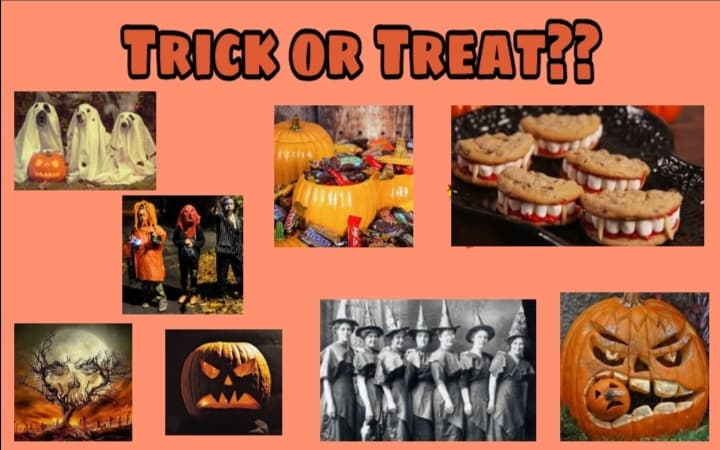
Trick or Treat???


Trick or treat. Trick or treat. Trick or Trick! Ah, didn’t we all love Halloween as kids eh (and I expect many of you still do now)! Dressed up in a scary outfit while running about with friends, banging on doors in hope for sweets. Hoping that you will spook the hell out of everyone who sees you, when in reality they all think you look adorable- and none of them are afraid to admit it! Providing parents are ok with it of course, but nowadays most of them are pretty chill… Although there are always a few people who are rather uncomfortable still around the idea of Halloween, and these aren’t just going to be shy dogs or Grannies either! Instead there are quite a few people who not only dislike the thought of young children on sugar highs giggling at 7pm, but there is also a deeper underlying issue…

Religion

So Halloween originated from the pagan festival, Samhain, which originated from an ancient Celtic spiritual festival, dating back 2000 years ago. At the time this day was called “Samhain” and people believed that the dead returned to earth that day. Strangely enough, as Christianity spread into Celtic lands by the 9th Century, the Christian movement actually blended with the initial day of celebration, as the church designated November the 2nd as “all saints day” where “Poor people would visit the houses of wealthier families and receive pastries called soul cakes in exchange for a promise to pray for the souls of the homeowners’ dead relatives.” Later on, this practice was taken up by children who would go knocking on doors asking for gifts including food, ale and money. By the mid 19th Century, it was mainly in America where Halloween was becoming popularized, partly from immigrants fleeing from the potato famine. However the pagan roots of the festival can help to explain why some religious people are opposed to the idea of Halloween and/or trick or treating. For a start there is religious unease regarding especially current pagan beliefs and practices. This is due to the strong contrasts between paganism and mainstream religion; such as that often pagans worship numerous gods, while most religions believe in there being just one God. While others practice witchcraft, which causes a strong unease amongst many religious groups. This has led to some Baptist pastors claiming that Halloween has satanic origins, however not all hold this attitude. Meanwhile the Catholic Church has taken a strong view against Halloween with Pope Benedict claiming that Halloween is a “dangerous and anti-Christian” festival as well as Jehovah Witnesses and Muslims taking a negative view.

Consumerism

So another strong reason why some may oppose Halloween/trick or treating is due to where it is thought to have originated or at least been made big, and the factors associated with this. Basically a lot of American culture revolves around consumerism, which can be an issue due to how Halloween is no longer a festival of fun, but rather something that young children are forced into enjoying, when arguably there is little genuine enjoyment people can get out of consumerism. Furthermore many from different countries, even those western countries with similar cultures to the USA, generally dislike the seemingly dominance of American culture, therefore they are not going to want an American event to takeover a countries own cultural event such as Guy Fawkes night in the UK . But for a start just think of the amount of goods we see in shops each year, which are probably only going to be used once before being thrown away. In America, those planning to celebrate Halloween this year are estimated to spend about $92.21. And I would hope and imagine that not all of this would be spend on “candy” (yawn), therefore the rest of the spending is likely to be on overpriced costumes not to mention plastic home decorations which are most likely going to get thrown away once Halloween is over for the year! Bringing up concerns about the environment…

Meanwhile the desire for children to stuff themselves with sweets, could also suggest an element of consumerism- with people always wanting more. Therefore it is understandable why parents would want to shield their children from this, and instead do everything in their power to protect them from these ugly forces for as long as possible. Obviously parents are likely to be concerned about the health affect of eating too many sweets, although eating like this once a year is unlikely to cause any long term damage.

The General Threat

So you may find it hard to think how a few young children dressed in sparkling outfits is going to cause much danger. However we need to remember that “grannies” and nervous dogs actually do exist, therefore having loads of strangers banging on the door late in the evening can be pretty frightening. Of course there is also the fear of property being egged or worse, or usually slightly older trick or treaters acting in a threatening way toward some people. This can cause potential unease in a community, although it is important to recognise that these occurrences realistically are rare.

What my parents said…

So there are actually many other reasons why people disapprove of trick or treating, though I think that quite often these reasons can be based off what I have already noted. So my parents were strangely hostile to the idea of trick or treating when I was younger, due to the idea of it being “begging” (though it is hardly begging when a house clearly has Halloween decorations outside, rather likely advertising the fact that they are offering sweets), the fact that it is “American” as well as that it can be threatening. Looking back, I can definitely see where these views have come from, nonetheless I do not think that these reasons should mean that a child should not be allowed to partake. Especially considering that these reasons aren’t the whole picture…

So should we let kids go trick or treating?

This year, the answer is no (sad face). But personally I would argue that in spite of the issues linked to trick or treating, it is very unlikely that an average child is going to look at it in this way. Therefore should we prohibit children from partaking in something which they see as a bit of innocent fun and possibly something in which makes them feel more tied to the local community, just because we may see lingering problems further down the line? We also need to keep in mind that although Halloween may appear very Americanised, it didn’t actually originate there, and instead it evolved through many countries and cultures, adopted gradually for different people, by different people. Therefore any person should allow themselves and other’s to enjoy it. In my view, this could be done best by adopting Halloween to suit the person, such as ensuring that enormous amounts of money aren’t spent each year.

The Glorification of the Soviet Union


So it is quite possible that you have heard people arguing against capitalism, maybe more so in recent years, rather than previously. I also think it is fair to say that many young people are especially opposed to capitalism, basically due to greater transparency enabling them to realise some of the horrors of in particular the western world. However there have been a scary number of videos on TikTok which have been showcasing photographs off the soviet and post soviet world. Because lets face it, it was one alternative to capitalism. However we ought to know that the Soviet Union was far from the “perfect situation”, and most likely these people are romanticising it without always realising this. But let’s uncover what could have possibly have caused this…

The Rise of Communism:

In Stark contrast with Capitalism where the distribution of resources is mainly left to the free market, communism is where major resources including property are owned by the public, where usually the aim is for an even distribution. 

During the industrial revolution, there was increasing antagonism toward capitalism due to the very poor working conditions and damaging environmental affects which were occurring. Ideas arose about alternative ways to run the economy, including famously “anarchist communism”- the idea that there should be no state and that all means of production should be owned by society .  While this might have seemed like a much fairer idea, and may have been popular with some, there was little clarity on the means to go about and achieve this…

Meanwhile in France during the early 1800s the new urban working class were becoming increasingly resistant, as they saw the contrasts between the ways of life for the wealthy upper class (the bourgeoisies), compared to the very poor working and living conditions they were in.  This led to many of the workers rebelling, and while the revolution wasn’t successful, many people within France still held these revolutionary ideas. 

This was all before the ideas of Karl Marx were produced.  Later known as “the father of Communism”, Marx produced a variety of works emphasising the class struggle prevalent in every historical society, due to the bourgeoisies exploiting the proletariat (working class).  He argued this will inevitably lead to a revolution, resulting in a communist society, as the proletariat become more aware of their class struggle.  And while his works may not have appeared to have been influential at the time, having formed a communist party with Engles and writing “The Communist Manifesto“, his works strongly influenced subsequent communist governments.

The Rise of the Soviet Union:

This included the government or leadership of the Soviet Union. To roughly explain what happened, Russia had been ruled by a monarchy for centuries leading to WW1.  Due to the high levels of poverty, this eventually caused many Russian workers to start and join protests against ruling of the country.  Eventually the Bolsheviks (communist party headed by Lenin at the time) overthrew the monarchy, and although they only gained 25% of the vote, they used military force to get through.  This however led to free healthcare, free education and electricity for everyone in Russia.  And while it was mainly a command economy, Lenin did allow for some free enterprise due to backlash faced by a various alternative parties and a civil war.  After Lenin died, Stalin took over adopting a much harsher and more brutal approach having already overthrown the government in Georgia as general secretary.  However the sudden changes in the country led to disruptions, including in agriculture which caused a famine, leading to farmers revolting.  From here, those deemed to oppose the regime were send to prison camps or were deported to remote parts of Russia, meanwhile those who took action against the dictatorship were executed under Stalin’s orders, known as the great purge.  Meanwhile Russia invaded large numbers of countries in the West, expanding the soviet union, alien to competing western principles throughout the cold war.

Life in the Soviet union:

So from what you have read, life in the Soviet union doesn’t exactly sound like glitter and rainbows.  However from the range of stories I have managed to gather, there have been various opinions on life during the soviet union, and these haven’t all been bad…  Some stated that they had “enjoyed life” during this time, however we need recognise that most people recalling life there more recently would have been young children at the time.  However other, more detailed stories, depict a less enjoyable time. One recalls living as a family of 5, only living in a small two room apartment. Meanwhile having to attend youth programs to install communist beliefs, while people were allocated a job on poor, fixed salaries, while the government continued to enjoy huge privileges.  Like Ranker.com states, the quality of life varied “wildly” over the years, depending on a large number of factors.  But there again, there were no soup kitchens for the poor, while the Soviet government stopped publishing statistics concerning poverty believing it “simply did not exist”.  Taking the average worker in the soviet union “ten times longer to produce a pound of meat, than it did the average American”. 

The Comeback of Communism:

So it might seem that the recent years have been dominated by right wing principles; from Trump in America, the rise of China after opening up the market to Brexit and the austerity measures in the UK.  Nevertheless at the same time we have seen some steering further to the left, and with young people seeming to become increasingly political vocal, it may suggest to some that the ideas of communism are once again trending…  Bloody TikTok, as an example, seems to be full of these ideas which have become a “worldwide trend, full of young people dealing with the past which they have not lived in.”  You may or may not know what I am on about, though before I uninstalled the thing, I kept coming across mainly white “E-Girls” showing “aesthetically pleasing” photographs of soviet countries.  Clearly too young to know what life was like back then, but judging from the sort of photos, they are clearly glamourising it…

But we know this is not the full picture.  Part of the reason for this I feel is literally due to the side affects of capitalism probably being slightly more transparent now (especially to young people) mainly due to the rise of the internet. And I would argue that because there is little education in schools concerning recent history (I didn’t know what the cold war was until a few months ago…) it means that people are more likely to look to these alternatives automatically assuming they are possibly better than capitalism…

But the growing popularity of communism is FAR MORE than just a few kids on TikTok promoting the soviet union.  After the 2008 financial crash, which was essentially as a result of the behavior of Banks, works by Karl Marx were on the rise again.  Possibly as it drew attention to some of the detrimental affects which can arise from greedy people under capitalism.  While there have been increases in support of communism in America, due to issues of climate change, rises in fascism as well as police brutality.  It has also been shown that slightly over half of liberal democrats there held “negative views” of capitalism.  Now due to the toll that the pandemic has and will continue to have on economies, it is likely that more questions will arise regarding the capitalist economy.  Especially amongst the young.  And while there is only an alternative number of options on how to run the economy in more of a fair way, it is likely that people may find hope in the principle of communism once again.

Soviet Art:

Ok, so the economy and art are two very different things, however we are not going to have teenagers often younger than myself glorifying something in such satisfying way, when there is nothing nice to look at, or nothing of aesthetic value.  No, instead art was rather prevalent throughout the soviet union.  During the early times of the soviet union, there were two main types of art; “Russian Futurists” and “Social realists“.  The former had been producing “lefist” art before the communist government came about, while the latter ended up being the only type of art produced officially.  Typically featuring images of lifestyles of families and groups of people (there was little lee way on what could be produced…).  However there is something else too which is important to the kind of aesthetic principle that leads people to glorifying this, which is more the case of the post soviet world, rather than during the actual time frame of the USSR.  This includes Russian fashion, and pictures of it up against very polluted industrial backgrounds, as well as the “architecture” of the soviet union. 

As a guess, the reason why this is so popular is because the apparience of the soviet union sort of fits in with alternative styles.  With dismantled, rusty plagrounds, probably littered with needdles which appear “edgy”, and flats which look worse than your average 70s council estate, it is no surprise that images of post soviet countries have began to have a presence on the online platform for young rebels and non conformists. 

But with the potential to appeal to young people in this way, there is a far deeper message lying behind why so many do choose to glorify it, as well as just a misunderstanding.  You probably still don’t think that a few young people who may not know exactly what they are posting about, glorifying the soviet/post soviet world as too bigger deal.  Or see it as too much of a danger.  Because lets face it, these people will either learn or never realise and forget about this.  Nonetheless it resembles a greater problem in the affects of capitalism which are arising, as well as the lack of education on certain issues. However if young people are informed and can know not to glorify inappropriate things (we have all been there…) then the increased transparency has got to be a good thing…

Why has the Government Really Made a Dollop of the Covid Crisis?


When Barriers are going UP, and when there is a risk that new diseases such as Corona…Virus will trigger a panic and a desire for market segregation…. that go beyond what is medically rational to the point of doing real and unnecessary economic damage…THEN (tap hand on table) at that moment humanity needs some government somewhere….”

Boris Johnson– February 2020

Did I really need to even mention his name, because it is the exact sort of thing which he would say isn’t it? Though it does quite nicely demonstrate our government’s ideology, doesn’t it? A fear of economic loss, a fear of government intervention and the desire for stability which ironically translates into reams of waffle- which basically boils down to sheer incomitance. Hopefully this post will be able to scramble this apart and with a bit of luck, it will provide some understanding as to why the government have handled the coronavirus crisis the way they have done so.. Oh and apologies because I do try to write my posts from a fairly neutral point of view, however I would find it incredibly difficult to stay neutral on this topic, though I am sure that I am not alone.

So before I go into the ideas which influence the “dark ideas” which influence the philosophy of the conservative party and this government really, lets recap on what it is that the government has/hasn’t done, to make this into such a catastrophe. I am aware that there are always going to be some people who are going to stick up for the government for one reason or another, while others, quite thoughtfully, take a good look at the situation and think to themselves why be so harsh on the government when they certainly could anywhere near as good a job, let alone a better one. However not only did the UK a higher covid death toll than any other country in Europe, but it is speculated that the UK has suffered the worst economic damage compared to any other European country. Therefore if the government was trying to reduce the economic damage by maybe accepting a higher death toll, then their incentive clearly has not worked. So what else can you blame the situation on? Ministers are supposed to have knowledge and experience not to mention the expertise that their advisors have (good old Dom…), so really they should still have had a better grip on it than the rest of the country. Meanwhile other factors which could have played a role were the high population density of the UK (partly true), the “behavior” of the British public (oh shut up!), or now we are seeing a divide.

Back to this later on, however for now lets think of a few examples where this government, have really…well;, messed up…

To start with you may or may not remember the fiasco concerning PPE, and the EU. Basically the European Union had offered to give the UK a certain amount of PPE including masks, gloves, goggles, gowns, testing kits and ventilators. But the UK declined. Initially it was simply “confusion” which had led to this decision, yet a government senior diplomat explains this slightly better saying it had been a “political decision”. We later find out that this would have been part of the EU joint procedure program which Britain had signed up to back in 2014, however a downing Street spokesman claimed that we are no longer in this as we are simply “not in the EU” (guardian). Yet it looks as if the UK had the option of being part of this, as it had been said that “the UK had only received an invitation to sit on the EU’s joint procedural program on the 19th of March.” Therefore the UK government had made a clear cut decision to not be involved with help from the EU. This hasn’t been the only time where the behavior of the UK toward the EU hasn’t exactly benefitted the UK in recent times!

A late lockdown was a perfect example of the government drooling behind. Before covid really hit the UK, Italy and Spain had already been affected, giving the UK a chance to catch into what worked and didn’t work in these places. It is suggested that the UK didn’t sooner call for a lockdown was because of Boris Johnson’s beliefs against a “nanny state” and “disdained the political instincts of those who use the state to tell the public what to do”. Another example was in 2004 when Johnson stated that “We should have the common sense to listen to others before we presume to act in their interests”, relating to a smoking ban.

Furthermore the UK had a painfully poor performance on testing. On the 12th May for example, Germany had “rolled out a widespread test-trace-isolate program” while in contrast the UK “abandoned  community testing and contact tracing”. Later health chiefs admitted “they did not have the “capacity” to carry out widespread checks” and it wasn’t until the 2nd oof April when Matt Hancock announced plans for mass testing.

Further life costing “mistakes” included the failure to test those going into a care home, confused messaging, the embarrassment of the test and trace system and the delay in closing the boarders/enforcing tests or quarantine on those entering.

Other possible factors…

So like I have already mentioned, there are other factors which have explained why the UK has experienced covid so badly. In the UK the average population density is “275 people per square kilometer” though we need to bear in mind some areas are going to be far more densely populated than others, while in Germany thee average population density is 237.3 per square km of land. Therefore we can expect higher numbers in areas with high population densities. However this cannot account for the UK having experienced nearly 4 times as many deaths…

Core Beliefs of the Party

This following part may repeat some comments made by recent conservative party leaders, however I also aim to depict how these reasonings are shaped. Well basically the conservative party are based on an ideology called conservatism, which is basically the want to “conserve” the society which we have, rather than calling for radical change. This and a strong emphasis on tradition may have been why the government was reluctant to implement too much of a drastic change when we were confronted with the coronavirus pandemic, as their aim would have been to continue with the way society is as much, and for as long as possible. For me this explains why the party were slow in reacting to the pandemic, because they will have wanted to keep things as normal as possible, for as long as possible. It was only when they really realised that the only attempt of really preserving society would be to call a lockdown, was when they started to do something about it all. This is a good example of pragmatism, another backbone to the conservative. Though if the government was serious about being pragmatic, then you would think that they would have responded in a similar way to how European countries with lower death rates had done, but sooner rather than later to ensure that the UK has as few deaths as possible. Furthermore more commonly known is that the conservative party generally promote ownership of property and minimal state intervention, which may have been why the government was reluctant to take such an interventionist approach too soon, being a threat to “personal freedoms”.

Distractions

So let’s return to the EU. So at the beginning of the year just when the message about the threat of coronavirus was coming through, Boris Johnson and the government were pre occupied, and still are now, with getting some kind of Brexit deal (or no deal…) done. But on the third of February, Boris Johnson was put in a position where he needed to speak of “dealing with coronavirus and keeping the public safe” before he returned to his original theme of the EU stating; “Now let’s get back to work!” This way, although we cannot see behind the scenes, it seems as if the government may have been too distracted to deal with the situation effectively… Yet again this is pragmatism in action, with a government keen to get “something done”, without letting any complexity stop them.

“Root Causes”

No, I am not referring to the virus itself here, as it doesn’t just meticulously choose to breed more in the UK than in most other places, but I am talking about the issues already prevailing in the UK which are going to enhance the spread in certain areas. As we have seen, the north generally has experienced the affects of covid far worse than the south. This is due to higher levels of deprivation, therefore people are likely to be less healthy as well as there being poorer healthcare in these areas. This is as well as often more crowded working and living conditions. This way we could say that it is due to this and previous conservative governments for not being as willing to tackle these problems…

So from this it can be seen that the government could certainly have performed better in the handling of covid, and even knowing some of the traditional ideologies of the party, it is hard to put a finger on the idea behind every action. While it is likely in my eyes that some of the mistakes may have been broadly down to incomitance rather than for any other reason, it is also true that the political ideology of the conservative party has contributed to influencing these decisions.

Feminists Can Wear Pink!


Hello so long time no hear right (sorry my soppy attempt of apologising for not posting in so long) but life has been pretty exhausting lately, with school work, having to move flat twice in less than two months, on top of paid work. If you are reading this then your views will probably differ on the extent of how tiring we should allow these factors to be, or even if they should be tiring at all. However on the topic of being tired, one thing we should all agree on is that there should not be so much misogyny in society that it leaves us feeling exhausted! Or sexism, or any type of discrimination, and you would think by now we would have moved a little further forward than what we have. Because should we all be so worried as to how we present ourselves, in case we don’t comply enough with our stereotype, or even if we end accidently complying too much? Should we really be anxious to partake in certain activities, for these same reasons?

This post may sound slightly strange coming from me, considering I am the person who barely bothers to wear makeup, refuses to wear heels at all costs, and is rather good at “forgetting” to shave my armpits! Yet I do like the odd dress, while I may even want to wear pink from time to time. So while I am certainly not immune to to the patriarchy (though it would be nice), I do think it is important to do our best in sticking to what we want. Even if one side complain that we are taking it all a bit too far, while others say we are taking it into the wrong direction…

The Makeup Dilemma

Most likely, when thinking about makeup (as a female, sorry), then it might be as another essential part of your morning routine. Alternatively, it may be something you are fundamentally against, feeling it is destined to only belittle women, as girls feel pressured to wear it at such a young age. Amongst all this lies the shaming off other women, for how they wear it, the amount they wear or even about how “ugly” they look without it…

But is it just me who thinks it is sad that all this undermines any positive use out of makeup, like for self expression? This way it doesn’t, and certainly shouldn’t be exclusive to girls either! Because just like we (should) choose the way we dress to express ourselves, makeup should be used in the same way. This way there shouldn’t be any fear around wearing makeup, providing that it is it out of choice rather than constraint. But we need to understand why many first and second wave feminists objected to the ideas of wearing makeup, before we go any further. Because in the past, there was enormous pressure on women to wear makeup such as in the workplace, while it was thought that men were attracted to women who wear it. This way, makeup was seen as a constraint on the woman, even being demeaning. While even now, there is distinct pressure on women to look a certain way. Additionally nowadays lots of women may make the claim that they are wearing it for themselves, which is excellent. However many feminists counter that it’s very rare due to the illusion of wearing it for yourself when realistically women are under a bigger constraint.

Can we Wear Pink?

The traditional colours representing males and females are blue and pink. The apparent reason for this may be unclear because pink and blue are basically two colours, although while depending on the tone of the colour as well as just the strong differences between the two, these do depict different moods. Though in reality we all associate pink to be related to feminity to some degree, yet there shouldn’t be shame in any gender choosing to wear pink because of shame about this.

Don’t Wear Dresses!

These days, there are far more of us choosing not to wear skirts or dresses on a higher number of occasions. Some of these reasons are perfectly understandable as it is not always comfortable or convenient to wear an especially long dress, while there is actually so much freedom to wear trousers now! Yet there may be other reasons, including the fact that many women who are insecure about their bodies may be reluctant to wear something that will reveal too much- contory to what many feminists promote! Therefore while often we may not want to wear a skirt for practical reasons, I still think there shouldn’t be any shame in wearing one out of choice. Meanwhile I’m not sure but I feel there is is a fear of looking “too feminine”, leading to shame about wearing a dress. Which may be a valid point until we ask ourselves why there should be any shame in embracing too much feminity.

“Punch Like a Girl”

Yeah who else vaguely remembers this movement? Great cause though I do often find myself questioning the impact that this has actually had. Because still there are so many assumptions about girls playing sport, still there are far less girls choosing to partake in certain activities due to fear it will be make dominated (vice versa for men) and while that advert may have been effective, it hasn’t exactly provoked change in quite the way we would have liked. For instance boys aged 5-16 are 20% likely to be active everyday, while girls of that age are only 14% likely to be.” And while for various reasons girls may actually benefit from what sport has to offer compared to boys, due to factors which have reduced their confidence in the past.

Very Unpopular Opinion: You cannot be a real feminist if you deny the problems that other genders face!

Because while it is crucial to consider the extent of constraints there is us girls, it is essential to recognise that those of other genders are also heavily affected by sexism today. Pressures on men to be “so masculine as to not show any emotion” are so bad that almost three quarters of suicides are by men. While life is still incredibly difficult for trans people and for those of other genders, with inaccurate judgments being made from all sides. This way, we have a role to ensure that feminism is as inclusive as possible, as not only will this make life better for those affected by our personal judgements, but an inclusive movement is the only way that women can be truly freed from the constraints which we face.

These themes outlined here are only a few of the arguments which have merely been touched upon, nevertheless they do outline some of the issues which we face and need to unpick as feminists. And while it may be very difficult to get to the bottom of these debates in order to know what we really want, it is important to question every decision we come to. While continuing to be open, honest and tolerant.

Do Grades Really Matter?


Hellooo, so I am going to give you a bit of background information before I begin with the post. So currently I am in year 13, and recently we have received our predicted grades, which has led to many people, predicted higher than myself, being rather stressed and upset over theirs. And while they can have a fair influence on where people end up going to university for example, I also feel that many think they heavily contribute to their self worth, which I feel really is a load of rubbish. And hopefully this post will explain why…

Does it not feel ridiculous?

So picture yourself at school for one moment in a GCSE class. Now what are you going to hear about. Apart from random chattering, much off it is going to be about exams and grades (the amount partly depending on how good the school and teaching is). Now imagine you are doing your A levels. You may even be stuck here now. But are you happily sat there, thinking that whatever happens you will have done your best and that there is so much more which will determine your success. Or rather are you overly worried that if you don’t get a certain grade, or if you don’t get into a prestigious university, you will be a little screwed and you will hate yourself forever? Even if there is not one piece of evidence to suggest that this could impact on your career prospect. Let alone chance of happiness!

There are Different Types of Intelligence (Seriously, look it up!)

To start with, I suppose many worry about their grades because A) it is a rather simple way to see how well someone is doing in a test, and also if you are planning to go to university, then high grades are the gateway of getting in to a certain university. This way then, understandably people are often going to feel more worthy if they get that certain grade, or get offered a place to a particular university. Because “only smart people get As, and only smart people get offered placements to the top universities”. But think again… That’s not to say that someone who does achieve an excellent grade is not intelligent, but instead that someone with a lower grade may be just as smart, but simply applies their knowledge in a different way to churning out information when responding to an A level exam question. Also there are many different types of intelligence which don’t always cover the ability to perform outstandingly well in an exam.

“If you Judge a Fish by its Ability to Climb a Tree, It Will Spend its Whole Life Believing that is is Stupid”

They don’t determine your success either…

Furthermore how on earth can a good grade really be the key to success? If you have gone down this road, then chances are you will have finished A levels at 18 ish and you will have finished an undergraduate course by your early 20s. At such a young age, we probably wouldn’t have perused a career by then, we probably haven’t had children yet plus we are still working so many things out. Therefore the only things we do have in our favor, at least work wise, are a few letters written on a piece of paper and a certificate. Now I appreciate that a grade can seem like a token of value or a ticket to a future destination, but how much value can they really measure, and there are so many other factors which can influence our future.

Practicality of Them

While though a grade can define how good we are at doing a certain exam, it doesn’t always equate to how much we can apply this knowledge in other ways, for instance a job. And while many employers are more interested in capability, or even enthusiasm for a job it shows that grades can only take us a certain way.

Finally some may be sorry to hear this, but doesn’t a passion for a subject matter more than the ability to regurgitate information about it. Because if we are good at something, yet have no care about how to use it to influence the real world, then what is the point of being “good” at it.

The Old Status Quo

If you are looking to get top notch grades then chances are, you are looking to get into a top notch university. This way, not always, but often this is in peruse of a top notch career. Take the most wealthy lawyers, the best solicitors and even the wealthists journalists: where amongst the top three in the world; one writes for the Daily Telegraph, one is a member of one of America’s wealthiest families (of course…) while the other was once arrested for computer hacking- oh and they are all men! But anyway, back onto the topic, people often seek a prestigious career, but can this really guarantee success in the terms of happiness, or even success career wise? Because while a degree may seem the only thing that is more important than what someone achieves before they are 19, for heavens sake- work and life experience is more important!

Grades are Far too Overvalued

Yes! And not only from the perspective that they cannot perfectly determine our ability in performing a certain job as well as the fact that grades don’t take passion into account (which is far more important in my opinion), but other jobs requiring low/different/no grades are just of equal value. Seriously! There are so many jobs which are of a practical basis, which require experience as well as often talent or passion as opposed to grades. Which may not all be proportionately of the same monetary value, but they are often of the same, if not then a greater value to society. Take being a firefighter, carpenter or working with animals. Yes, we might require training at a college, and experience in order to be really sufficient, but a degree would be about as useful as a dog in a kitchen. And if your house was on fire, then you would be pretty fucked if there wasn’t anyone to put it out!

Success should be about Personal Fulfilment…

In other words, everyone focuses too much on the idea of success being based around what someone earns, the “type” of job someone has, not to mention of course their educational accomplishments. But there are so many other ways in life which we can succeed. For instance we can raise children well giving them a happy start and enabling them to be able to live a happy life as adults, or we can even succeed in living a happy life without all the crazy levels of work or wealth that a good grade might lead to. It makes sense that being happy can be the most success one can really wish to accomplish, because in all cases being happy is more of worth than being miserable, even if we are able to cry in a jacuzzi!

Do we Judge by Grades too Much?

Usually it is fair to say that if someone wants to take something like medicine or another science/arhitimatic based subject, then they must know their stuff. However being able to learn and churn a load of information, while remembering about a number of practical’s isn’t necessarily going to make you a good dentist for example, however if you understand the necessary information and are able to work with it, without necessarily remembering everything from the top of your head, then I don’t quite see why it would make you such a bad one. Obviously if one is writing an exam, then they will also need a good understanding of the content as well as the ability to interpret different elements of information if they want to do well. However this doesn’t always go hand in hand, while not being able to stick to a certain guide in an essay isn’t always going to mean you would be insufficient for the work you want to undertake. While it is also true that it is hard to measure enthusiasm for a subject, but yet again grades don’t even start to represent this. This way I would judge that universities are too particular some of the time when it does come to grades, though when there is such high demand, it is hard to come up with a more practical alternative. However more importantly, it is ourselves who often overestimate the value that they are worth, because at the end of the day they cannot begin to determine how enthusiastic we will be about our future line of work, it is crazy really to think they can add (or lose) points to our self worth because a very mere estimate of our knowledge and ability of a particular subject cannot begin to define who we are.

Politics on TikTok??


🎶🎸UH oh….. Tory Alert…. 🎸

(Disclaimer: Not me, incase you aren’t familiar with TikTok)

Yes Tiktok! it does seem to be this way. Therefore it is about time that there is a platform where people (generally young) can voice their political views freely without being prosecuted for it. Because we can look at these videos knowing some will be of a similar view point to our own, therefore this can enable our values to strengthen much more. Now whatever standpoint you have, there are going to be some videos you agree with, and others you don’t agree with. But least we can all have a laugh, and hopefully learn…

But Can we be too Judgemental?

White, Middle aged, Middle Class, Men from parts of Middle England. Who spend their days trekking about the golf course, mowing their enormous lawns oh and spoiling their daughters. Who probably attend private school. Yeah, a pretty decent group of people to make fun out of, especially when they tend to marginalize everyone else…

Alright, so we can say there is an element of truth in this, but come on. It is also pretty funny, but is confronting a rather shallow and really, inaccurate video really the best way to introduce young people to politics? As this mixed in with more informative sources is fine, however when a teenager is seeing this and nothing else, then consequently their views won’t be as developed. We need to also remember that the length of Tiktok videos are short, often meme based, and uplifting- usually featuring a dance. So can it really be able to depict the political world in a genuine manner. As in this way, views expressed are not only likely to be shallow, meaning viewers will be at risk of developing little understanding but they could create further hostility in the political world…

Though surely the more alternatives there are for political expression, the better, especially when mainstream media is arguably bias. While traditionally I feel that politics was less inclusive to young people, compared to what it is now. Remembering when I was too young to understand politics, I thought that dinner table discussions would be confined to people over the age of 40, while newspapers were reserved for those who had nothing better to do with their mornings than sit at their glass tables reading the telegraph! Only when I became exposed to politics properly in colour, knowing I wasn’t the only young person out there who gave a doss was when I began to take more interest myself. Though at the time it was still a little strange as access to information, especially of the sort directed at people of that age, was scarce…

So though these videos are far from ideal, at least they successfully provoke interest. And while really it is impossible for them to be 100% accurate and informative, it should enable young people to seek out further information elsewhere.

“This doesn’t even matter when we think that some of the videos are completely False!”

This widespread of misinformation is potentially threatening, yet occurs more often than we may think. This has included a video featuring “proof” that climate change is not real with images of snow, making claims that Hillary Clinton was involved with satanic sacrifice and an older man talking about former president Obama being a foreign exchange student and thus his whole president has been illegal. As much of this is going to reach younger people, there is the danger that this will provoke them into believing these “facts”…. As you can probably guess there have been efforts made to fact check videos on tiktok, yet because there are so many being made, it makes it extremely hard to get through all of them. The best videos lasting around ten seconds doesn’t help either. Moreover it is harder to fact check videos on TikTok compared to Instagram and Facebook, as on TikTok it is easier for a user or a user’s content to go viral, as who sees the videos is determined by an alga rhythm rather than how frequently the user engages with others. The issue with this relating to politics is that “young people who are only starting to form their opinions on politics are getting political messages alongside fun videos that are teaching them how to shuffle dance”. Meaning “their default response isn’t necessarily to question the validity of the message but to passively consume it as you would other entertainment content.” The obvious main issue with this is that young people are going to at risk of believing the lies of these videos, thus spreading what they see elsewhere.

Saying this however, Tiktok is certainly not the first platform where lies have been spread. In fact these videos generally lasting less than a minute may give Tiktok some advantage over other platforms when it comes to the concern of the spread of fake news. Look at Facebook, their average user is generally older than the average tiktok user, nevertheless some really bizarre content is being spread about. Long winded captions take longer than a minute to read, meaning those who choose to read this are obviously more likely to take notice of what is being read compared to a short but sharp, meme video which is likely to be swept under the carpet. Though this could be taken the other way to say that users on Facebook can easily decide to ignore the spread of false information, by simply not reading these kinds of posts or joining the wrong groups. While if an inappropriate video appears on someone’s TikTok feed, it is harder for them not to view it.

According to poynter, “young people tend to be slightly more skeptical of that they see online” compared to older people. This could be due to them being a generation who have grown up in the age of the internet, so they are more prone to the dangers online. Yet there is still the major risk, especially with TikTok, that it could lead the youngest of internet users to believe the false information.

So we can gather that while it is generally positive that the youngest generation are being introduced to politics, it is important to be aware of the risks online. For instance we do not want young people to end up believing in some very abstract conspiracy theory, while I don’t particularly want any of them to turn into Trump supporters. It is important to know the risks that TikTok itself poses, as there are going to be a lot of videos, therefore it is quite likely that a young person is going to come across something that’s inaccurate sooner or later… Therefore while it is important that young people can be made aware of the dangers of misinformation on TikTok, we cannot deny that it is exciting that young people are more interested in politics than ever before. Therefore it is important to allow them to watch TikTok in spite of the faults it may possess, while strongly encourage them to find sources which, well cover more, from elsewhere.

Sources: Quarrtz, poynter

Mental Health Romanisation: Birthed by Social Media or a Shadow Waiting to Emerge?


In the last few years, it has seemed like the internet has given birth to a culture of mental health romanization. Now whether you have seen this on tumblr, Instagram or now TikTok, it does seem rather strange. Because in recent years there has been so much success by those speaking out to reduce the stigma associated with mental health. While it is fair to judge that many of these people, would have had close experiences with mental health themselves. Yet there has been a significant, maybe unconscious, movement in the other direction, generally by those also likely to have experienced it. ‘But does this not at least mean that it will get more people talking? Not to mention “Increased awareness!” ‘ Maybe, but it is going to be completely counterintuitive when it is the wrong kind! But there is bound to be a reason for it…

Contemporary Teenage Culture

If you knew me well a couple of years ago, you may have been aware that I was obsessed with “Skins”- a popular series on Netflix featuring the lives of teenagers. Generally speaking, about their experiences and relationships with parties, alcohol and drugs and with one another. In this respect their lives were far more interesting than ~cough~ some other teenagers. Now this could be a reason for attachment toward it, however it also explored mental illness, showcasing how it affected some of the most spoken about characters.

Effy Stoneman. Loved for her sassy attitude, her dark mysterious style and her all go lifestyle. Though as we really get to know her in say the forth series, we begin to see that her life is really in pieces. Nursing her severely depressed mother, being frequently used yet not really ready for a relationship while her only female friend is the bubbly, frothy, but rather naïve Pandora. She develops a serious, potentially life threatening mental illness, where she eventually gets admitted to a psychiatric ward.

Something which people need to be more aware of? Yep? Artistic licence will allow for a character who is seriously glammed up, to end up only finding herself in a seriously dark place (while viewers will hopefully realize that her life was not what it seemed). Though understandably this leads to a generally young audience choosing to produce videos combining this glamourous characteristic, with the mental illnesses experienced. However this will inevitably lead to people A) Deciding that romanticisation of mental illness is normal thus potentially taking their own problems less seriously or B) Undermining someone else’s issues, thinking that mental illness is just another aspect of modern teenage culture…

But where does this really root from?

Hollywood is the earliest trace I can find, of where mental illness was reflected upon in entertainment. Very different to how it is portrayed now, “the crazy bad guys” or the main villain in a horror movie would be the one to display certain behaviors and characteristics attributed to certain mental illnesses. In more recent times, as knowledge on mental illness has improved and as more people can openly relate to them, film and TV has been enabled to incorporate mental illnesses into otherwise “normal” characters. Skins obviously as an example, however other modern TV shows have showcased mental health in a far worse way. While now there have been examples of programs where viewers feel have got it right including; Homeland, Jessica Jones and This is Us, there is still a very long way to go before modern media can represent mental illness in a broadly honest, and realistic manner. Now don’t get me wrong, the expression of mental health on TV is potentially a positive, as it can enable greater understanding. But when it continues to be expressed in a superficial manner, it sadly bridges the way for more fake but romantic expression online. Giving the completely wrong view.

See the source image
But How does this Happen?

Why do some people choose to make something of what they see on TV, in relation to their personal experience, into some kind of art? For some it is simply a “way of coping” which “lights up reward pathways in people’s brain’s” during a difficult experience. This enables the person to feel as if they are A) fighting their situation hence they’re strong B) things might just get better, and C) Maybe makes them feel better about themselves and their illness. Therefore it is understandable as to why people might try to connect their illness with something more glamourous, however sadly this can manifest into a lack of genuine understanding surrounding mental health. Meaning that many may see mental illnesses to be as a “trend”, while other generally younger people may associate negative feelings or experiences with mental illnesses, or even use a mental health illness as a way of describing how they feel!

This in itself and to be fair the reduction of stigma has resulted in many young people expressing feelings of mental illness on sites including tumblr. Generally these kinds of posts depict their pain in a kind of romantic, edgy and intelligent way- however nothing like the reality of a mental illness. Perhaps at the heart of this, it is literally helping the person cope as it expresses a sort of inner strength, and while the person may not feel optimistic that they will recover from their mental illness, at least by seeing it in a better light it makes them feel like a “fighter”. Yet, as feminisminindia points out, “romanticisation of mental illness is an awful attempt at making them ‘beautiful” or  ‘edgy’ and ‘cool’ .” Yet this had further adverse implications. Because if anyone thinks they are joking about it in order to break the stigma (which I would disagree to, it is more as a coping mechanism), they would be out of luck. Instead it “feeds to the misunderstanding and misconstrued ideas people have about mental health” leading to others denying “the illness and people’s sufferings”.

This leads to concerns that the movement to destigmatize mental illness has “gone too far the other way and have now become confused with something young people should aspire to”. Because while those suffering may unintentionally romanticise it on mainstream media, not only do more people become exposed to this issue in a deluded way, but it means that people develop opinions on mental health which are substantially far from the truth. Meaning that yes, mental health is spoken about, however it is not in the way in which it is needed to be. Of course we have not gone far enough in tackling the stigma, and questioning the affects of over romanticisation is a necessary part of this, but we can see why some may hold the view of why perhaps people should be more quiet about mental health.

Thirdly it is not just media where we can see completely wrong interpretations of mental health, however the issue of mental illness is often featured in art. This hasn’t just been a recent phenom where we have seen increased drawings of balling eyes or similar pictures, but we can trace art exhibiting struggles dating back years. It is said that Van Gough, born in 1853, was known to have been experiencing “frequent episodes of depression, paralyzing anxiety” and bipolar, “which would eventually claim his life”. This had a heavy influence on his later pieces.

““Art should comfort the disturbed and disturb the comfortable”

Cesar Cruz

Considering that mental illness has had an enormous impact on people’s lives from the past, just as it does so now, resulting in these emotions being rendered in art work it is no wonder why so much more of this is visible to us today. In a world where it is so much easier to share art with the wider public, and subsequently there is a higher chance of it being viewed by more people. Now you may think that the recent outburst in mental health romantisation is therefore nothing to worry about. Nevertheless unless you know a lot about a particular artist, if you are very smart or if you may be suffering with the illness expressed (or a combination of the three), then chances are you will glance over the art. Yes you may still be intrigued, however it would not provoke you to think what the artist is going through is something desirable, but rather you would be intrigued with what the artist is trying to convey, and probably be a little sympathetic. Nonetheless the art, or “aesthetic” that we see online is usually a lot more blatant!

So we know why people may choose to take their experiences in the wrong direction, but we also know the dangers associated with this. And we see that now this is becoming ever more apparent, as we see memes on Facebook, “low-key” promo on TikTok, and even garments of clothing on featuring the words “anxiety” or something similar. Yet most people suffering mental illness are fed up of some of these affects, as well as the classic forms of misinterpretation, or incorrect expressions. Therefore it is important that there is a cautious and considerate effort made in tacking the stigma surrounding mental health in a correct way, and everyone regarding our circumstances has a good role to play.

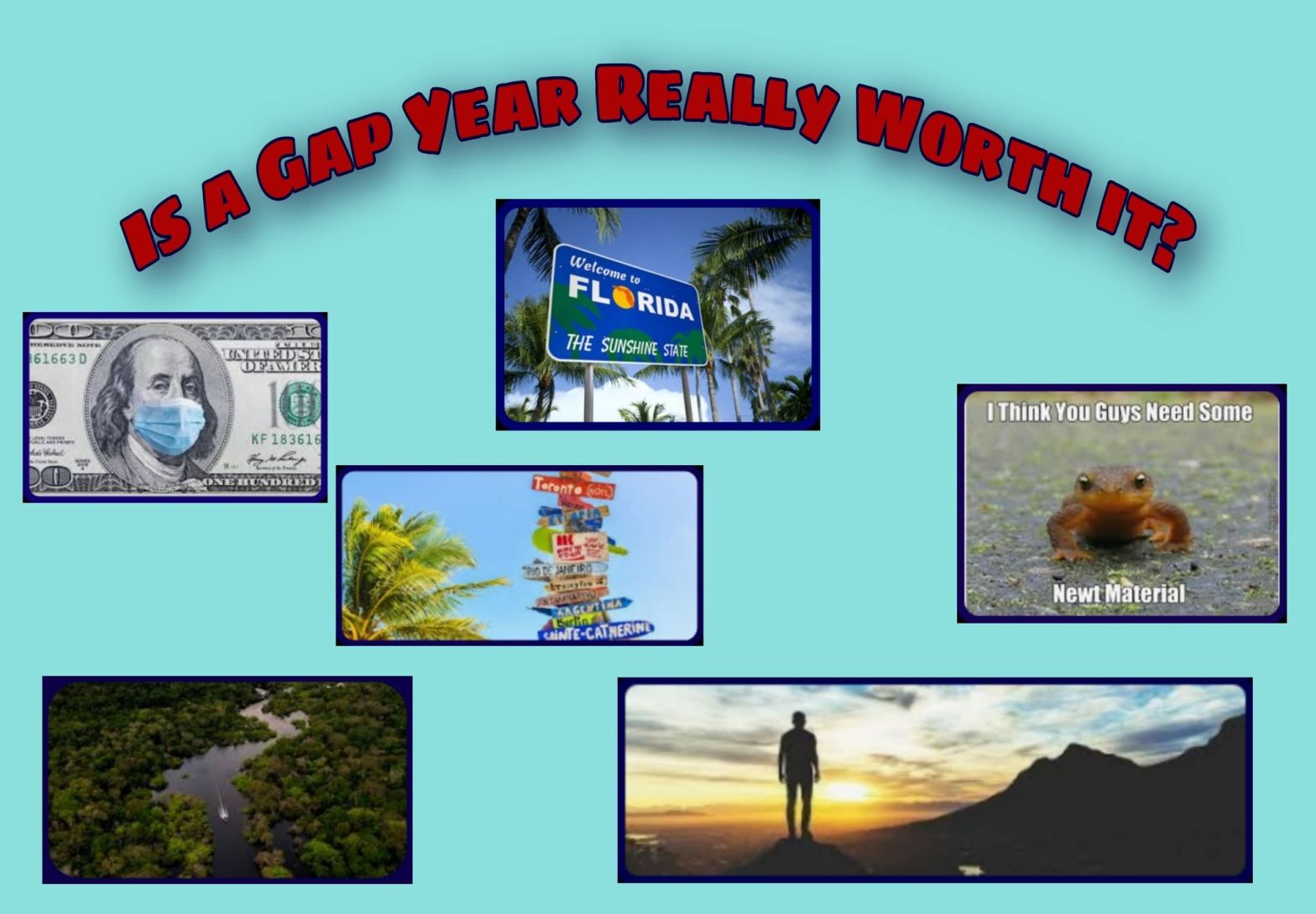
Is a Gap Year Really Worth It??


“Oh my God, I have no clue what I am doing with my Life!”

Me too love! Nevertheless I have literally been back at year 13 for just over two weeks and I have already got to a stage where I want to ban the letters A,B,C,D and E from the alphabet! Though we know that grades don’t really define our lives as much as some think they do, and they certainly don’t define ourselves! Yet the question still arises as to what to do after we finish A levels, with one of these options being a gap year.

Now most years, year 13s would picture a gap year as almost some tropical fantasy, going from beach to beach, clambering over numerous rocky mountains and discovering amazing wildlife. Including as newts, while probably getting as pissed as one! But of course, it is going to be expensive. Very expensive. And unless you have very rich parents or parents who are going to spoil you sick, or that you are doing so much paid work that you would end up failing your A levels, Period. But this year, even with unlikely prospect of families offering up a lot of money, we have another limitation. Covid-19. Meaning that our gap year would most likely be spent watching everyone else go off to university while we are stuck at home. Sigh…

So how common are gap years and what is the use of them? As it does look as if they have been on the rise, but in actual fact it is estimated that about 3% of freshmen take a gap year”. While it sounds fun, the estimated cost is between £3000 and £4000, making it a difficult option for the average student as I have already mentioned!

Furthermore I personally find (though I could be wrong) that there is this kind of stigma associated with going on a gap year, because people think that they are a waste of time, and that they are only for very wealthy privileged students. In this way we can understand why there may be some backlash. For instance Malia Obama’s decision to embark on a gap year before joining university, provoked much discussion. With there being some controversy, raising questions to whether it is just a “luxury for the rich“. However due the number of advantages taking a gap year has, and the amount of maturity people attain from taking one, it it is felt that they “are not just for rich kids anymore”. Remembering that there’s also opportunities to go on “working holidays” abroad, or simply do a job at home.

Though when thinking about it, it is not surprising that students who have taken a gap year return to university far more mature than those who haven’t. Thinking that from the age of 4 (or 2 if you count nursery) to 18 you are trapped within the system of (mainly) academic education. And while from 16 there is the opportunity to partake in an apprentice, the mainstream route to university is via A levels. Sadly the education system does focus very heavily on academic achievement, from the importance of SAT testing at 11, to the new and much harder 9-1 GCSE grading system. Therefore having the opportunity to go on a year’s long adventure, while probably attaining a completely new outlook on life, is bound to mean that a student will return to the education system, much more mature.

With programs offering opportunities ranging from helping to build infrastructure projects in poor areas, helping deprived children or even helping endangered animals (forget my joke about newts), the advantages are pretty apparent.

Though sadly the volunteering industry does have its issues, with some questioning whether it is appropriate for anyone to be using their services at all. For a start it is worth billions, which exploits people paying immense sums of money to be part of them. Meanwhile often the programs aren’t at all productive, such as in that certain infrastructure is built in where there is the equivalent to that near by. Furthermore those running the programs often lack the understanding of the culture in that area in order for them to help the people in a sufficient way. But at the same time, often these projects do result in successes, though I would advise (from a background of limited knowledge) that it is best to do a little research into the sort of program you would like to do, before embarking on anything.

But with this in mind, the matter of needing certain amounts of money is not going to go away! Yet a gap year isn’t necessarily something that you need to pay for at all, but rather the opposite. Yes, you could choose to go on a paid gap year, and while the experiences aren’t going to be quite the same, it will still be something of worth- totally different to anything experienced beforehand.

Now it is all the worthwhile arguing out both sides on whether having a gap year is good or not, though it can still seem very hard to reach a conclusion. Because while we want the experience of a lifetime, we don’t want to make a naive decision and we may not want to feel “left behind either”. Though depending on who you are, this doesn’t have to be the case. In this sense, it depends on the person as to whether the benefits of a gap year outweigh the costs. While I would agree that you don’t have to be super rich to be able to go on a gap year, as the nature of them does vary, though saying this if someone has a lot of money they are not going to be as limited.

Though sadly it is true that next year it may be more difficult to embark on a gap year because of the travel restrictions and the rather high potential chance that many of the programs are likely to be cancelled.

So there are so many positive and negative sides to doing a gap year, however I would argue that attaining this experience, whether it is from a year out, a few years out, or odd scattered months out, it is an experience that would be very valuable at some point in life. The stigma attached to them may be true to some degree, in about them being expensive as well as the fact that not all programs are always fully effective. Yet the money situation should not put anyone off, because if it is something which one is passionate about, then it is critical to do whatever that can be done to make it happen. Even if it consists of quite a bit of paid work while travelling. And while the industry of volunteering is quite rightly a concern, programs should be compared to find which programs are more “legit”. Finally a gap year does not have to be a year straight after sixth form, but it could be at whatever time that suits.